
LangNation
Courses Browse courses Regular One-to-one Intensive Placement test
Exams Exam papers Study material Einbürgerungstest
Germany Living and studying in Germany Study in Germany The German school system Your first weeks Working in Germany
Tools German grade ECTS credits Overall band TOEFL ⇄ IELTS converter
About us About Events Gallery Blog FAQ
Contact Request a call back Deutsch
  1. Frage 1 Leben in der Demokratie

    In Deutschland dürfen Menschen offen etwas gegen die Regierung sagen, weil …

    1. hier Religionsfreiheit gilt.
    2. die Menschen Steuern zahlen.
    3. die Menschen das Wahlrecht haben.
    4. hier Meinungsfreiheit gilt. richtig
    In English

    In Germany people may speak out openly against the government because …

    1. A there is freedom of religion here.
    2. B people pay taxes.
    3. C people have the right to vote.
    4. D there is freedom of expression here.

    Unofficial translation, to help you read the question. Only the German wording counts in the exam.

    Warum? Die Meinungsfreiheit erlaubt es, die eigene Meinung frei zu äußern — auch Kritik an der Regierung. Sie steht in Artikel 5 des Grundgesetzes. Art. 5 GG

  2. Frage 2 Leben in der Demokratie

    In Deutschland können Eltern bis zum 14. Lebensjahr ihres Kindes entscheiden, ob es in der Schule am …

    1. Geschichtsunterricht teilnimmt.
    2. Religionsunterricht teilnimmt. richtig
    3. Politikunterricht teilnimmt.
    4. Sprachunterricht teilnimmt.
    In English

    In Germany, until their child is 14, parents may decide whether it takes part at school in …

    1. A history lessons.
    2. B religious education.
    3. C politics lessons.
    4. D language lessons.

    Unofficial translation, to help you read the question. Only the German wording counts in the exam.

    Warum? Religionsunterricht ist ordentliches Lehrfach, aber niemand muss daran teilnehmen. Bis zum 14. Geburtstag entscheiden die Eltern, danach das Kind selbst. Art. 7 GG

  3. Frage 3 Leben in der Demokratie

    Deutschland ist ein Rechtsstaat. Was ist damit gemeint?

    1. Alle Einwohnerinnen/Einwohner und der Staat müssen sich an die Gesetze halten. richtig
    2. Der Staat muss sich nicht an die Gesetze halten.
    3. Nur Deutsche müssen die Gesetze befolgen.
    4. Die Gerichte machen die Gesetze.
    In English

    Germany is a state governed by the rule of law. What does that mean?

    1. A All residents and the state itself must obey the law.
    2. B The state does not have to obey the law.
    3. C Only Germans have to obey the law.
    4. D The courts make the laws.

    Unofficial translation, to help you read the question. Only the German wording counts in the exam.

    Warum? Rechtsstaat heißt: das Gesetz gilt für alle — auch für den Staat selbst. Behörden, Polizei und Regierung sind an Recht und Gesetz gebunden. Art. 20 Abs. 3 GG

  4. Frage 4 Leben in der Demokratie

    Welches Recht gehört zu den Grundrechten in Deutschland?

    1. Waffenbesitz
    2. Faustrecht
    3. Meinungsfreiheit richtig
    4. Selbstjustiz
    In English

    Which right is one of the basic rights in Germany?

    1. A owning a weapon
    2. B taking the law into your own hands
    3. C freedom of expression
    4. D private vengeance

    Unofficial translation, to help you read the question. Only the German wording counts in the exam.

    Warum? Die Grundrechte stehen in den Artikeln 1 bis 19 des Grundgesetzes. Meinungsfreiheit gehört dazu; Waffenbesitz und Selbstjustiz nicht. Art. 5 GG

  5. Frage 5 Leben in der Demokratie

    Wahlen in Deutschland sind frei. Was bedeutet das?

    1. Man darf Geld annehmen, wenn man dafür eine bestimmte Kandidatin/einen bestimmten Kandidaten wählt.
    2. Nur Personen, die noch nie im Gefängnis waren, dürfen wählen.
    3. Die Wählerin/der Wähler darf bei der Wahl weder beeinflusst noch zu einer bestimmten Stimmabgabe gezwungen werden und keine Nachteile durch die Wahl haben. richtig
    4. Alle wahlberechtigten Personen müssen wählen.
    In English

    Elections in Germany are free. What does that mean?

    1. A You may accept money in return for voting for a particular candidate.
    2. B Only people who have never been in prison may vote.
    3. C Voters may not be influenced or forced to vote in a particular way, and must suffer no disadvantage because of how they vote.
    4. D Everyone entitled to vote must vote.

    Unofficial translation, to help you read the question. Only the German wording counts in the exam.

    Warum? "Frei" bezieht sich auf die Stimmabgabe: kein Druck, keine Bestechung, keine Nachteile. Wahlpflicht gibt es in Deutschland nicht. Art. 38 GG

  6. Frage 6 Leben in der Demokratie

    Wie heißt die deutsche Verfassung?

    1. Volksgesetz
    2. Bundesgesetz
    3. Deutsches Gesetz
    4. Grundgesetz richtig
    In English

    What is the German constitution called?

    1. A Volksgesetz
    2. B Bundesgesetz
    3. C Deutsches Gesetz
    4. D Grundgesetz (Basic Law)

    Unofficial translation, to help you read the question. Only the German wording counts in the exam.

    Warum? Die Verfassung heißt Grundgesetz. Der Name war 1949 als Provisorium gedacht, bis ganz Deutschland sich eine Verfassung geben könnte — geblieben ist er bis heute.

  7. Frage 7 Leben in der Demokratie

    Welches Recht gehört zu den Grundrechten, die nach der deutschen Verfassung garantiert werden? Das Recht auf …

    1. Glaubens- und Gewissensfreiheit richtig
    2. Unterhaltung
    3. Arbeit
    4. Wohnung
    In English

    Which right is one of the basic rights guaranteed by the German constitution? The right to …

    1. A freedom of faith and conscience
    2. B entertainment
    3. C work
    4. D housing

    Unofficial translation, to help you read the question. Only the German wording counts in the exam.

    Warum? Glaubens- und Gewissensfreiheit ist ein Grundrecht. Arbeit und Wohnung sind Sozialstaatsziele, aber keine einklagbaren Grundrechte. Art. 4 GG

  8. Frage 8 Leben in der Demokratie

    Was steht nicht im Grundgesetz von Deutschland?

    1. Die Würde des Menschen ist unantastbar.
    2. Alle sollen gleich viel Geld haben. richtig
    3. Jeder Mensch darf seine Meinung sagen.
    4. Alle sind vor dem Gesetz gleich.
    In English

    What is not in Germany's Basic Law?

    1. A Human dignity is inviolable.
    2. B Everyone should have the same amount of money.
    3. C Everyone may express their opinion.
    4. D All people are equal before the law.

    Unofficial translation, to help you read the question. Only the German wording counts in the exam.

    Warum? Das Grundgesetz garantiert Gleichheit vor dem Gesetz — nicht gleiches Einkommen oder gleiches Vermögen. Art. 3 GG

  9. Frage 9 Leben in der Demokratie

    Welches Grundrecht gilt in Deutschland nur für Ausländerinnen/Ausländer? Das Grundrecht auf …

    1. Schutz der Familie
    2. Menschenwürde
    3. Asyl richtig
    4. Meinungsfreiheit
    In English

    Which basic right in Germany applies only to foreign nationals? The basic right to …

    1. A protection of the family
    2. B human dignity
    3. C asylum
    4. D freedom of expression

    Unofficial translation, to help you read the question. Only the German wording counts in the exam.

    Warum? Die meisten Grundrechte gelten für alle Menschen. Das Asylrecht kann seiner Natur nach nur von Ausländerinnen und Ausländern in Anspruch genommen werden. Art. 16a GG

  10. Frage 10 Leben in der Demokratie

    Was ist mit dem deutschen Grundgesetz vereinbar?

    1. die Prügelstrafe
    2. die Folter
    3. die Todesstrafe
    4. die Geldstrafe richtig
    In English

    Which of these is compatible with the German Basic Law?

    1. A corporal punishment
    2. B torture
    3. C the death penalty
    4. D a fine

    Unofficial translation, to help you read the question. Only the German wording counts in the exam.

    Warum? Die Todesstrafe ist abgeschafft, Folter und Prügelstrafe sind verboten. Eine Geldstrafe ist eine normale gerichtliche Strafe. Art. 102 GG

  11. Frage 11 Leben in der Demokratie

    Wie wird die Verfassung der Bundesrepublik Deutschland genannt?

    1. Grundgesetz richtig
    2. Bundesverfassung
    3. Gesetzbuch
    4. Verfassungsvertrag
    In English

    What is the constitution of the Federal Republic of Germany called?

    1. A Grundgesetz (Basic Law)
    2. B Bundesverfassung
    3. C Gesetzbuch
    4. D Verfassungsvertrag

    Unofficial translation, to help you read the question. Only the German wording counts in the exam.

    Warum? Dieselbe Frage wie Nr. 6, nur anders formuliert: Die Verfassung der Bundesrepublik heißt Grundgesetz.

  12. Frage 12 Leben in der Demokratie

    Eine Partei im Deutschen Bundestag will die Pressefreiheit abschaffen. Ist das möglich?

    1. Ja, wenn mehr als die Hälfte der Abgeordneten im Bundestag dafür sind.
    2. Ja, aber dazu müssen zwei Drittel der Abgeordneten im Bundestag dafür sein.
    3. Nein, denn die Pressefreiheit ist ein Grundrecht. Sie kann nicht abgeschafft werden. richtig
    4. Nein, denn nur der Bundesrat kann die Pressefreiheit abschaffen.
    In English

    A party in the German Bundestag wants to abolish freedom of the press. Is that possible?

    1. A Yes, if more than half the members of the Bundestag are in favour.
    2. B Yes, but two thirds of the members of the Bundestag must be in favour.
    3. C No, because freedom of the press is a basic right. It cannot be abolished.
    4. D No, because only the Bundesrat can abolish freedom of the press.

    Unofficial translation, to help you read the question. Only the German wording counts in the exam.

    Warum? Die Pressefreiheit ist ein Grundrecht. Grundrechte können auch mit einer Mehrheit im Bundestag nicht abgeschafft werden. Art. 5 GG

  13. Frage 13 Leben in der Demokratie

    Im Parlament steht der Begriff "Opposition" für …

    1. die regierenden Parteien.
    2. die Fraktion mit den meisten Abgeordneten.
    3. alle Parteien, die bei der letzten Wahl die 5%-Hürde erreichen konnten.
    4. alle Abgeordneten, die nicht zu der Regierungspartei/den Regierungsparteien gehören. richtig
    In English

    In parliament, the term "opposition" means …

    1. A the governing parties.
    2. B the parliamentary group with the most members.
    3. C all parties that cleared the 5% threshold at the last election.
    4. D all members who do not belong to the governing party or parties.

    Unofficial translation, to help you read the question. Only the German wording counts in the exam.

    Warum? Opposition sind alle Abgeordneten, die nicht zur Regierung gehören. Ihre Aufgabe ist es, die Regierung zu kontrollieren und Alternativen anzubieten.

  14. Frage 14 Leben in der Demokratie

    Meinungsfreiheit in Deutschland heißt, dass ich …

    1. Passanten auf der Straße beschimpfen darf.
    2. meine Meinung im Internet äußern kann. richtig
    3. Nazi-, Hamas- oder Islamischer Staat-Symbole öffentlich tragen darf.
    4. meine Meinung nur dann äußern darf, solange ich der Regierung nicht widerspreche.
    In English

    Freedom of expression in Germany means that I …

    1. A may insult passers-by in the street.
    2. B may state my opinion on the internet.
    3. C may wear Nazi, Hamas or Islamic State symbols in public.
    4. D may only state my opinion as long as I do not contradict the government.

    Unofficial translation, to help you read the question. Only the German wording counts in the exam.

    Warum? Die Meinung darf man überall äußern, auch im Internet. Beleidigungen und verbotene Symbole sind aber nicht von der Meinungsfreiheit gedeckt. Art. 5 GG

  15. Frage 15 Leben in der Demokratie

    Was verbietet das deutsche Grundgesetz?

    1. Militärdienst
    2. Zwangsarbeit richtig
    3. freie Berufswahl
    4. Arbeit im Ausland
    In English

    What does the German Basic Law forbid?

    1. A military service
    2. B forced labour
    3. C free choice of occupation
    4. D working abroad

    Unofficial translation, to help you read the question. Only the German wording counts in the exam.

    Warum? Zwangsarbeit ist verboten. Jede Person darf Beruf und Arbeitsplatz frei wählen. Art. 12 GG

  16. Frage 16 Leben in der Demokratie

    Wann ist die Meinungsfreiheit in Deutschland eingeschränkt?

    1. bei der öffentlichen Verbreitung falscher Behauptungen über einzelne Personen richtig
    2. bei Meinungsäußerungen über die Bundesregierung
    3. bei Diskussionen über Religionen
    4. bei Kritik am Staat
    In English

    When is freedom of expression restricted in Germany?

    1. A when false claims about individual people are spread publicly
    2. B when opinions are expressed about the federal government
    3. C in discussions about religions
    4. D in criticism of the state

    Unofficial translation, to help you read the question. Only the German wording counts in the exam.

    Warum? Die Meinungsfreiheit endet dort, wo die Rechte anderer verletzt werden — etwa durch Beleidigung, üble Nachrede oder falsche Tatsachenbehauptungen über Personen.

  17. Frage 17 Leben in der Demokratie

    Die deutschen Gesetze verbieten …

    1. Meinungsfreiheit der Einwohnerinnen und Einwohner.
    2. Petitionen der Bürgerinnen und Bürger.
    3. Versammlungsfreiheit der Einwohnerinnen und Einwohner.
    4. Ungleichbehandlung der Bürgerinnen und Bürger durch den Staat. richtig
    In English

    German law forbids …

    1. A freedom of expression for residents.
    2. B petitions by citizens.
    3. C freedom of assembly for residents.
    4. D unequal treatment of citizens by the state.

    Unofficial translation, to help you read the question. Only the German wording counts in the exam.

    Warum? Der Staat darf niemanden ohne sachlichen Grund ungleich behandeln. Meinungsfreiheit, Versammlungsfreiheit und Petitionen sind dagegen ausdrücklich erlaubt. Art. 3 GG

  18. Frage 18 Leben in der Demokratie

    Welches Grundrecht ist in Artikel 1 des Grundgesetzes der Bundesrepublik Deutschland garantiert?

    1. die Unantastbarkeit der Menschenwürde richtig
    2. das Recht auf Leben
    3. Religionsfreiheit
    4. Meinungsfreiheit
    In English

    Which basic right is guaranteed in Article 1 of the Basic Law of the Federal Republic of Germany?

    1. A the inviolability of human dignity
    2. B the right to life
    3. C freedom of religion
    4. D freedom of expression

    Unofficial translation, to help you read the question. Only the German wording counts in the exam.

    Warum? Artikel 1 ist der erste Satz des Grundgesetzes: "Die Würde des Menschen ist unantastbar." Er steht bewusst vor allen anderen Rechten. Art. 1 GG

  19. Frage 19 Leben in der Demokratie

    Was versteht man unter dem Recht der "Freizügigkeit" in Deutschland?

    1. Man darf sich seinen Wohnort selbst aussuchen. richtig
    2. Man kann seinen Beruf wechseln.
    3. Man darf sich für eine andere Religion entscheiden.
    4. Man darf sich in der Öffentlichkeit nur leicht bekleidet bewegen.
    In English

    What is meant by the right of "Freizügigkeit" (freedom of movement) in Germany?

    1. A You may choose where you live.
    2. B You may change your occupation.
    3. C You may decide to follow a different religion.
    4. D You may go about in public wearing very little.

    Unofficial translation, to help you read the question. Only the German wording counts in the exam.

    Warum? Freizügigkeit heißt: Man darf im ganzen Bundesgebiet frei wohnen und sich frei bewegen. Art. 11 GG

  20. Frage 20 Leben in der Demokratie

    Eine Partei in Deutschland verfolgt das Ziel, eine Diktatur zu errichten. Sie ist dann …

    1. tolerant.
    2. rechtsstaatlich orientiert.
    3. gesetzestreu.
    4. verfassungswidrig. richtig
    In English

    A party in Germany pursues the aim of establishing a dictatorship. It is then …

    1. A tolerant.
    2. B committed to the rule of law.
    3. C law-abiding.
    4. D unconstitutional.

    Unofficial translation, to help you read the question. Only the German wording counts in the exam.

    Warum? Parteien, die die freiheitliche demokratische Grundordnung beseitigen wollen, sind verfassungswidrig. Verbieten kann sie nur das Bundesverfassungsgericht. Art. 21 GG

  21. Frage 21 Leben in der Demokratie

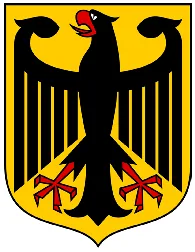
    Welches ist das Wappen der Bundesrepublik Deutschland?

    Bild 1 zu Frage 21
    Bild 1
    Bild 2 zu Frage 21
    Bild 2
    Bild 3 zu Frage 21
    Bild 3
    Bild 4 zu Frage 21
    Bild 4
    1. Bild 1
    2. Bild 2 richtig
    3. Bild 3
    4. Bild 4
    In English

    Which is the coat of arms of the Federal Republic of Germany?

    1. A Bild 1
    2. B Bild 2
    3. C Bild 3
    4. D Bild 4

    Unofficial translation, to help you read the question. Only the German wording counts in the exam.

    Warum? Der Bundesadler: ein schwarzer, nach rechts blickender Adler auf goldenem Schild. Nicht zu verwechseln mit dem Balkenkreuz der Bundeswehr oder dem Wappen der DDR.

  22. Frage 22 Leben in der Demokratie

    Was für eine Staatsform hat Deutschland?

    1. Monarchie
    2. Diktatur
    3. Republik richtig
    4. Fürstentum
    In English

    What form of state does Germany have?

    1. A monarchy
    2. B dictatorship
    3. C republic
    4. D principality

    Unofficial translation, to help you read the question. Only the German wording counts in the exam.

    Warum? Republik heißt: Das Staatsoberhaupt wird gewählt und erbt sein Amt nicht. Deutschland hat keinen König und keine Königin.

  23. Frage 23 Leben in der Demokratie

    In Deutschland sind die meisten Erwerbstätigen …

    1. in kleinen Familienunternehmen beschäftigt.
    2. ehrenamtlich für ein Bundesland tätig.
    3. selbstständig mit einer eigenen Firma tätig.
    4. bei einer Firma oder Behörde beschäftigt. richtig
    In English

    In Germany, most people in work are …

    1. A employed in small family businesses.
    2. B working voluntarily for a Bundesland.
    3. C self-employed with their own company.
    4. D employed by a company or a public authority.

    Unofficial translation, to help you read the question. Only the German wording counts in the exam.

    Warum? Die große Mehrheit der Erwerbstätigen ist abhängig beschäftigt — bei einer Firma oder im öffentlichen Dienst. Selbstständige sind die Minderheit.

  24. Frage 24 Leben in der Demokratie

    Wie viele Bundesländer hat die Bundesrepublik Deutschland?

    1. 14
    2. 15
    3. 16 richtig
    4. 17
    In English

    How many Bundesländer does the Federal Republic of Germany have?

    1. A 14
    2. B 15
    3. C 16
    4. D 17

    Unofficial translation, to help you read the question. Only the German wording counts in the exam.

    Warum? Seit der Wiedervereinigung 1990 hat Deutschland 16 Bundesländer: elf alte, fünf neue.

  25. Frage 25 Leben in der Demokratie

    Was ist kein Bundesland der Bundesrepublik Deutschland?

    1. Elsass-Lothringen richtig
    2. Nordrhein-Westfalen
    3. Mecklenburg-Vorpommern
    4. Sachsen-Anhalt
    In English

    Which of these is not a Bundesland of the Federal Republic of Germany?

    1. A Elsass-Lothringen (Alsace-Lorraine)
    2. B Nordrhein-Westfalen
    3. C Mecklenburg-Vorpommern
    4. D Sachsen-Anhalt

    Unofficial translation, to help you read the question. Only the German wording counts in the exam.

    Warum? Elsass-Lothringen liegt in Frankreich. Die anderen drei sind deutsche Bundesländer.

  26. Frage 26 Leben in der Demokratie

    Deutschland ist …

    1. eine kommunistische Republik.
    2. ein demokratischer und sozialer Bundesstaat. richtig
    3. eine kapitalistische und soziale Monarchie.
    4. ein sozialer und sozialistischer Bundesstaat.
    In English

    Germany is …

    1. A a communist republic.
    2. B a democratic and social federal state.
    3. C a capitalist and social monarchy.
    4. D a social and socialist federal state.

    Unofficial translation, to help you read the question. Only the German wording counts in the exam.

    Warum? Das Grundgesetz nennt Deutschland ausdrücklich einen "demokratischen und sozialen Bundesstaat". Art. 20 Abs. 1 GG

  27. Frage 27 Leben in der Demokratie

    Deutschland ist …

    1. ein sozialistischer Staat.
    2. ein Bundesstaat. richtig
    3. eine Diktatur.
    4. eine Monarchie.
    In English

    Germany is …

    1. A a socialist state.
    2. B a federal state.
    3. C a dictatorship.
    4. D a monarchy.

    Unofficial translation, to help you read the question. Only the German wording counts in the exam.

    Warum? Bundesstaat heißt: Es gibt eine Ebene für das ganze Land (den Bund) und eine für die Länder. Beide haben eigene Aufgaben.

  28. Frage 28 Leben in der Demokratie

    Wer wählt in Deutschland die Abgeordneten zum Bundestag?

    1. das Militär
    2. die Wirtschaft
    3. das wahlberechtigte Volk richtig
    4. die Verwaltung
    In English

    Who elects the members of the Bundestag in Germany?

    1. A the military
    2. B business
    3. C the people entitled to vote
    4. D the civil service

    Unofficial translation, to help you read the question. Only the German wording counts in the exam.

    Warum? Der Bundestag wird direkt vom wahlberechtigten Volk gewählt. Das ist der Kern der Volkssouveränität.

  29. Frage 29 Leben in der Demokratie

    Welches Tier ist das Wappentier der Bundesrepublik Deutschland?

    1. Löwe
    2. Adler richtig
    3. Bär
    4. Pferd
    In English

    Which animal is the heraldic animal of the Federal Republic of Germany?

    1. A lion
    2. B eagle
    3. C bear
    4. D horse

    Unofficial translation, to help you read the question. Only the German wording counts in the exam.

    Warum? Das Wappentier ist der Bundesadler. Er hängt auch im Plenarsaal des Bundestages.

  30. Frage 30 Leben in der Demokratie

    Was ist kein Merkmal unserer Demokratie?

    1. regelmäßige Wahlen
    2. Pressezensur richtig
    3. Meinungsfreiheit
    4. verschiedene Parteien
    In English

    Which of these is not a feature of our democracy?

    1. A regular elections
    2. B censorship of the press
    3. C freedom of expression
    4. D several different parties

    Unofficial translation, to help you read the question. Only the German wording counts in the exam.

    Warum? Pressezensur gehört zur Diktatur, nicht zur Demokratie. Artikel 5 sagt ausdrücklich: "Eine Zensur findet nicht statt." Art. 5 GG

Fragen und Abbildungen aus dem amtlichen Gesamtfragenkatalog des Bundesamtes für Migration und Flüchtlinge, Stand 2025-05-07. LangNation ist ein unabhängiges Lernangebot und steht nicht in Verbindung mit dem Bundesamt für Migration und Flüchtlinge.