
LangNation
Courses Browse courses Regular One-to-one Intensive Placement test
Exams Exam papers Study material Einbürgerungstest
Germany Living and studying in Germany Study in Germany The German school system Your first weeks Working in Germany
Tools German grade ECTS credits Overall band TOEFL ⇄ IELTS converter
About us About Events Gallery Blog FAQ
Contact Request a call back Deutsch
  1. Frage 181 Geschichte und Verantwortung

    Was wollte Willy Brandt mit seinem Kniefall 1970 im ehemaligen jüdischen Ghetto in Warschau ausdrücken?
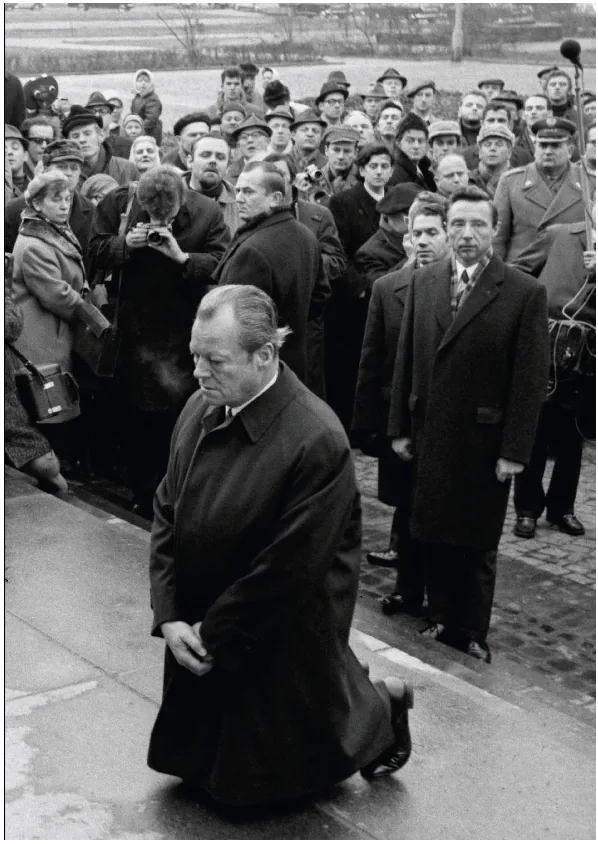
    Abbildung zu Frage 181

    © Bundesregierung/Engelbert Reineke

    1. Er hat sich den ehemaligen Alliierten unterworfen.
    2. Er bat Polen und die polnischen Juden um Vergebung. richtig
    3. Er zeigte seine Demut vor dem Warschauer Pakt.
    4. Er sprach ein Gebet am Grab des Unbekannten Soldaten.
    In English

    What did Willy Brandt want to express by kneeling in the former Jewish ghetto in Warsaw in 1970?

    1. A He submitted to the former Allies.
    2. B He asked Poland and the Polish Jews for forgiveness.
    3. C He showed his humility before the Warsaw Pact.
    4. D He said a prayer at the grave of the Unknown Soldier.

    Unofficial translation, to help you read the question. Only the German wording counts in the exam.

    Warum? Der Kniefall von Warschau 1970 war eine wortlose Bitte um Vergebung für die deutschen Verbrechen — eine Geste, die um die Welt ging.

  2. Frage 182 Geschichte und Verantwortung

    Wie heißt das jüdische Gebetshaus?

    1. Basilika
    2. Moschee
    3. Synagoge richtig
    4. Kirche
    In English

    What is the Jewish house of prayer called?

    1. A basilica
    2. B mosque
    3. C synagogue
    4. D church

    Unofficial translation, to help you read the question. Only the German wording counts in the exam.

    Warum? Die Synagoge. Die Moschee ist islamisch, Kirche und Basilika sind christlich.

  3. Frage 183 Geschichte und Verantwortung

    Wann war in der Bundesrepublik Deutschland das "Wirtschaftswunder"?

    1. 40er Jahre
    2. 50er Jahre richtig
    3. 70er Jahre
    4. 80er Jahre
    In English

    When was the "economic miracle" in the Federal Republic of Germany?

    1. A the 1940s
    2. B the 1950s
    3. C the 1970s
    4. D the 1980s

    Unofficial translation, to help you read the question. Only the German wording counts in the exam.

    Warum? Die 50er Jahre: schneller Wiederaufbau, starkes Wachstum, Vollbeschäftigung. In diese Zeit fällt auch die Anwerbung der Gastarbeiter.

  4. Frage 184 Geschichte und Verantwortung

    Auf welcher rechtlichen Grundlage wurde der Staat Israel gegründet?

    1. eine Resolution der Vereinten Nationen richtig
    2. ein Beschluss des Zionistenkongresses
    3. ein Vorschlag der Bundesregierung
    4. ein Vorschlag der UdSSR
    In English

    On what legal basis was the State of Israel founded?

    1. A a United Nations resolution
    2. B a decision of the Zionist Congress
    3. C a proposal by the German federal government
    4. D a proposal by the USSR

    Unofficial translation, to help you read the question. Only the German wording counts in the exam.

    Warum? Der UN-Teilungsplan von 1947. Israel erklärte 1948 seine Unabhängigkeit.

  5. Frage 185 Geschichte und Verantwortung

    Wofür stand der Ausdruck "Eiserner Vorhang"? Für die Abschottung …

    1. des Warschauer Pakts gegen den Westen richtig
    2. Norddeutschlands gegen Süddeutschland
    3. Nazi-Deutschlands gegen die Alliierten
    4. Europas gegen die USA
    In English

    What did the term "Iron Curtain" stand for? The sealing off …

    1. A of the Warsaw Pact from the West
    2. B of northern Germany from southern Germany
    3. C of Nazi Germany from the Allies
    4. D of Europe from the USA

    Unofficial translation, to help you read the question. Only the German wording counts in the exam.

    Warum? Die Grenze zwischen dem sowjetisch beherrschten Osten und dem Westen — von der Ostsee bis zur Adria. Der Ausdruck stammt von Winston Churchill.

  6. Frage 186 Geschichte und Verantwortung

    Im Jahr 1953 gab es in der DDR einen Aufstand, an den lange Zeit in der Bundesrepublik Deutschland ein Feiertag erinnerte. Wann war das?

    1. 1. Mai
    2. 17. Juni richtig
    3. 20. Juli
    4. 9. November
    In English

    In 1953 there was an uprising in the GDR that was long commemorated by a public holiday in the Federal Republic of Germany. When was it?

    1. A 1 May
    2. B 17 June
    3. C 20 July
    4. D 9 November

    Unofficial translation, to help you read the question. Only the German wording counts in the exam.

    Warum? Der 17. Juni 1953. Er war bis 1990 in der Bundesrepublik der Nationalfeiertag; seither ist es der 3. Oktober.

  7. Frage 187 Geschichte und Verantwortung

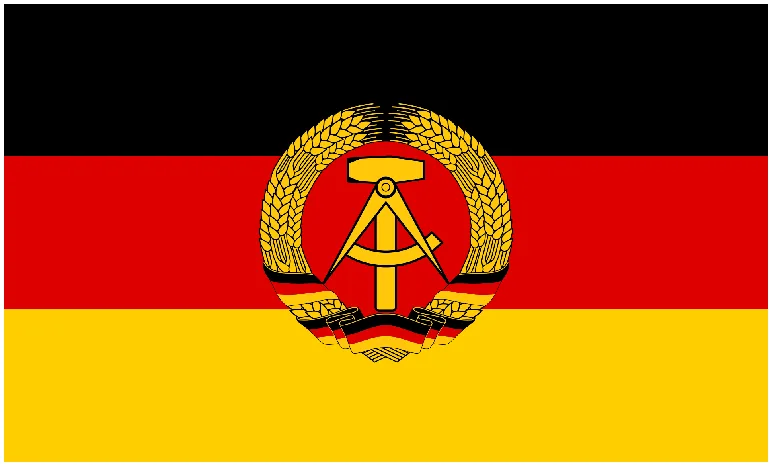
    Welcher deutsche Staat hatte eine schwarz-rot-goldene Flagge mit Hammer, Zirkel und Ährenkranz?

    Abbildung zu Frage 187
    1. Preußen
    2. Bundesrepublik Deutschland
    3. "Drittes Reich"
    4. DDR richtig
    In English

    Which German state had a black-red-gold flag with a hammer, a pair of compasses and a wreath of grain?

    1. A Prussia
    2. B the Federal Republic of Germany
    3. C the "Third Reich"
    4. D the GDR

    Unofficial translation, to help you read the question. Only the German wording counts in the exam.

    Warum? Die DDR nutzte dieselben Farben wie die Bundesrepublik, aber mit Hammer, Zirkel und Ährenkranz in der Mitte.

  8. Frage 188 Geschichte und Verantwortung

    In welchem Jahr wurde die Mauer in Berlin gebaut?

    1. 1953
    2. 1956
    3. 1959
    4. 1961 richtig
    In English

    In which year was the Wall built in Berlin?

    1. A 1953
    2. B 1956
    3. C 1959
    4. D 1961

    Unofficial translation, to help you read the question. Only the German wording counts in the exam.

    Warum? Am 13. August 1961 begann die DDR mit dem Bau.

  9. Frage 189 Geschichte und Verantwortung

    Wann baute die DDR die Mauer in Berlin?

    1. 1919
    2. 1933
    3. 1961 richtig
    4. 1990
    In English

    When did the GDR build the Wall in Berlin?

    1. A 1919
    2. B 1933
    3. C 1961
    4. D 1990

    Unofficial translation, to help you read the question. Only the German wording counts in the exam.

    Warum? Wie Nr. 188: 1961.

  10. Frage 190 Geschichte und Verantwortung

    Was bedeutet die Abkürzung DDR?

    1. Dritter Deutscher Rundfunk
    2. Die Deutsche Republik
    3. Dritte Deutsche Republik
    4. Deutsche Demokratische Republik richtig
    In English

    What does the abbreviation DDR stand for?

    1. A Dritter Deutscher Rundfunk
    2. B Die Deutsche Republik
    3. C Dritte Deutsche Republik
    4. D Deutsche Demokratische Republik (German Democratic Republic)

    Unofficial translation, to help you read the question. Only the German wording counts in the exam.

    Warum? Deutsche Demokratische Republik — der Name des ostdeutschen Staates von 1949 bis 1990.

  11. Frage 191 Geschichte und Verantwortung

    Wann wurde die Mauer in Berlin für alle geöffnet?

    1. 1987
    2. 1989 richtig
    3. 1992
    4. 1995
    In English

    When was the Wall in Berlin opened to everyone?

    1. A 1987
    2. B 1989
    3. C 1992
    4. D 1995

    Unofficial translation, to help you read the question. Only the German wording counts in the exam.

    Warum? Am Abend des 9. November 1989, nach Wochen von Demonstrationen und einer missverständlichen Pressekonferenz.

  12. Frage 192 Geschichte und Verantwortung

    Welches heutige deutsche Bundesland gehörte früher zum Gebiet der DDR?

    1. Brandenburg richtig
    2. Bayern
    3. Saarland
    4. Hessen
    In English

    Which of today's German Bundesländer was formerly part of the GDR?

    1. A Brandenburg
    2. B Bayern
    3. C Saarland
    4. D Hessen

    Unofficial translation, to help you read the question. Only the German wording counts in the exam.

    Warum? Brandenburg ist eines der fünf neuen Länder. Bayern, Saarland und Hessen lagen im Westen.

  13. Frage 193 Geschichte und Verantwortung

    Von 1961 bis 1989 war Berlin …

    1. ohne Bürgermeister.
    2. ein eigener Staat.
    3. durch eine Mauer geteilt. richtig
    4. nur mit dem Flugzeug erreichbar.
    In English

    From 1961 to 1989 Berlin was …

    1. A without a mayor.
    2. B a state of its own.
    3. C divided by a wall.
    4. D reachable only by aeroplane.

    Unofficial translation, to help you read the question. Only the German wording counts in the exam.

    Warum? Von 1961 bis 1989 trennte die Mauer West- und Ost-Berlin. Ein Bürgermeister und Flüge gab es weiterhin.

  14. Frage 194 Geschichte und Verantwortung

    Am 3. Oktober feiert man in Deutschland den Tag der Deutschen …

    1. Einheit. richtig
    2. Nation.
    3. Bundesländer.
    4. Städte.
    In English

    On 3 October Germany celebrates the Day of German …

    1. A Unity.
    2. B Nation.
    3. C Bundesländer.
    4. D Cities.

    Unofficial translation, to help you read the question. Only the German wording counts in the exam.

    Warum? Der 3. Oktober 1990 ist der Tag, an dem die DDR der Bundesrepublik beitrat. Er ist der einzige bundesweite gesetzliche Feiertag.

  15. Frage 195 Geschichte und Verantwortung

    Welches heutige deutsche Bundesland gehörte früher zum Gebiet der DDR?

    1. Hessen
    2. Sachsen-Anhalt richtig
    3. Nordrhein-Westfalen
    4. Saarland
    In English

    Which of today's German Bundesländer was formerly part of the GDR?

    1. A Hessen
    2. B Sachsen-Anhalt
    3. C Nordrhein-Westfalen
    4. D Saarland

    Unofficial translation, to help you read the question. Only the German wording counts in the exam.

    Warum? Sachsen-Anhalt gehört zu den fünf neuen Ländern.

  16. Frage 196 Geschichte und Verantwortung

    Warum nennt man die Zeit im Herbst 1989 in der DDR "Die Wende"? In dieser Zeit veränderte sich die DDR politisch …

    1. von einer Diktatur zur Demokratie. richtig
    2. von einer liberalen Marktwirtschaft zum Sozialismus.
    3. von einer Monarchie zur Sozialdemokratie.
    4. von einem religiösen Staat zu einem kommunistischen Staat.
    In English

    Why is the period in autumn 1989 in the GDR called "Die Wende" (the turning point)? In that period the GDR changed politically …

    1. A from a dictatorship to a democracy.
    2. B from a liberal market economy to socialism.
    3. C from a monarchy to social democracy.
    4. D from a religious state to a communist state.

    Unofficial translation, to help you read the question. Only the German wording counts in the exam.

    Warum? Innerhalb eines Jahres wurde aus dem SED-Staat eine Demokratie mit freien Wahlen — und dann Teil der Bundesrepublik.

  17. Frage 197 Mensch und Gesellschaft

    Welches heutige deutsche Bundesland gehörte früher zum Gebiet der DDR?

    1. Thüringen richtig
    2. Hessen
    3. Bayern
    4. Bremen
    In English

    Which of today's German Bundesländer was formerly part of the GDR?

    1. A Thüringen
    2. B Hessen
    3. C Bayern
    4. D Bremen

    Unofficial translation, to help you read the question. Only the German wording counts in the exam.

    Warum? Thüringen gehört zu den fünf neuen Ländern.

  18. Frage 198 Mensch und Gesellschaft

    Welches heutige deutsche Bundesland gehörte früher zum Gebiet der DDR?

    1. Bayern
    2. Niedersachsen
    3. Sachsen richtig
    4. Baden-Württemberg
    In English

    Which of today's German Bundesländer was formerly part of the GDR?

    1. A Bayern
    2. B Niedersachsen
    3. C Sachsen
    4. D Baden-Württemberg

    Unofficial translation, to help you read the question. Only the German wording counts in the exam.

    Warum? Sachsen gehört zu den fünf neuen Ländern.

  19. Frage 199 Mensch und Gesellschaft

    Mit der Abkürzung "Stasi" meinte man in der DDR …

    1. das Parlament.
    2. das Ministerium für Staatssicherheit. richtig
    3. eine regierende Partei.
    4. das Ministerium für Volksbildung.
    In English

    In the GDR, the abbreviation "Stasi" meant …

    1. A parliament.
    2. B the Ministry for State Security.
    3. C a governing party.
    4. D the Ministry of Education.

    Unofficial translation, to help you read the question. Only the German wording counts in the exam.

    Warum? Das Ministerium für Staatssicherheit war Geheimdienst und Geheimpolizei der DDR, mit einem riesigen Netz von Spitzeln.

  20. Frage 200 Mensch und Gesellschaft

    Welches heutige deutsche Bundesland gehörte früher zum Gebiet der DDR?

    1. Hessen
    2. Schleswig-Holstein
    3. Mecklenburg-Vorpommern richtig
    4. Saarland
    In English

    Which of today's German Bundesländer was formerly part of the GDR?

    1. A Hessen
    2. B Schleswig-Holstein
    3. C Mecklenburg-Vorpommern
    4. D Saarland

    Unofficial translation, to help you read the question. Only the German wording counts in the exam.

    Warum? Mecklenburg-Vorpommern gehört zu den fünf neuen Ländern.

  21. Frage 201 Mensch und Gesellschaft

    Welche der folgenden Auflistungen enthält nur Bundesländer, die zum Gebiet der früheren DDR gehörten?

    1. Niedersachsen, Nordrhein-Westfalen, Hessen, Schleswig-Holstein, Brandenburg
    2. Mecklenburg-Vorpommern, Brandenburg, Sachsen, Sachsen-Anhalt, Thüringen richtig
    3. Bayern, Baden-Württemberg, Rheinland-Pfalz, Thüringen, Sachsen
    4. Sachsen, Thüringen, Hessen, Niedersachen, Brandenburg
    In English

    Which of the following lists contains only Bundesländer that were part of the former GDR?

    1. A Niedersachsen, Nordrhein-Westfalen, Hessen, Schleswig-Holstein, Brandenburg
    2. B Mecklenburg-Vorpommern, Brandenburg, Sachsen, Sachsen-Anhalt, Thüringen
    3. C Bayern, Baden-Württemberg, Rheinland-Pfalz, Thüringen, Sachsen
    4. D Sachsen, Thüringen, Hessen, Niedersachsen, Brandenburg

    Unofficial translation, to help you read the question. Only the German wording counts in the exam.

    Warum? Die fünf neuen Länder: Mecklenburg-Vorpommern, Brandenburg, Sachsen, Sachsen-Anhalt und Thüringen. Berlin war geteilt und zählt gesondert.

  22. Frage 202 Mensch und Gesellschaft

    Zu wem gehörte die DDR im "Kalten Krieg"?

    1. zu den Westmächten
    2. zum Warschauer Pakt richtig
    3. zur NATO
    4. zu den blockfreien Staaten
    In English

    Which side did the GDR belong to in the "Cold War"?

    1. A the Western powers
    2. B the Warsaw Pact
    3. C NATO
    4. D the non-aligned states

    Unofficial translation, to help you read the question. Only the German wording counts in the exam.

    Warum? Die DDR gehörte zum Ostblock und war Mitglied des Warschauer Pakts, dem Gegenstück zur NATO.

  23. Frage 203 Mensch und Gesellschaft

    Wie hieß das Wirtschaftssystem der DDR?

    1. Marktwirtschaft
    2. Planwirtschaft richtig
    3. Angebot und Nachfrage
    4. Kapitalismus
    In English

    What was the GDR's economic system called?

    1. A market economy
    2. B planned economy
    3. C supply and demand
    4. D capitalism

    Unofficial translation, to help you read the question. Only the German wording counts in the exam.

    Warum? In der Planwirtschaft bestimmte der Staat, was, wie viel und zu welchem Preis produziert wurde.

  24. Frage 204 Mensch und Gesellschaft

    Wie wurden die Bundesrepublik Deutschland und die DDR zu einem Staat?

    1. Die Bundesrepublik hat die DDR besetzt.
    2. Die heutigen fünf östlichen Bundesländer sind der Bundesrepublik Deutschland beigetreten. richtig
    3. Die westlichen Bundesländer sind der DDR beigetreten.
    4. Die DDR hat die Bundesrepublik Deutschland besetzt.
    In English

    How did the Federal Republic of Germany and the GDR become one state?

    1. A The Federal Republic occupied the GDR.
    2. B Today's five eastern Bundesländer acceded to the Federal Republic of Germany.
    3. C The western Bundesländer acceded to the GDR.
    4. D The GDR occupied the Federal Republic of Germany.

    Unofficial translation, to help you read the question. Only the German wording counts in the exam.

    Warum? Die DDR trat nach Artikel 23 des Grundgesetzes der Bundesrepublik bei. Es war ein Beitritt, keine Neugründung.

  25. Frage 205 Mensch und Gesellschaft

    Mit dem Beitritt der DDR zur Bundesrepublik Deutschland gehören die neuen Bundesländer nun auch …

    1. zur Europäischen Union. richtig
    2. zum Warschauer Pakt.
    3. zur OPEC.
    4. zur Europäischen Verteidigungsgemeinschaft.
    In English

    With the GDR's accession to the Federal Republic of Germany, the new Bundesländer now also belong …

    1. A to the European Union.
    2. B to the Warsaw Pact.
    3. C to OPEC.
    4. D to the European Defence Community.

    Unofficial translation, to help you read the question. Only the German wording counts in the exam.

    Warum? Mit dem Beitritt galt für die neuen Länder alles, was für die Bundesrepublik galt — auch die Mitgliedschaft in der Europäischen Gemeinschaft.

  26. Frage 206 Mensch und Gesellschaft

    Woran erinnern die sogenannten „Stolpersteine“ in Deutschland?

    1. an berühmte deutsche Politikerinnen und Politiker
    2. an die Opfer des Nationalsozialismus richtig
    3. an Verkehrstote
    4. an bekannte jüdische Musiker
    In English

    What do the so-called "Stolpersteine" (stumbling stones) in Germany commemorate?

    1. A famous German politicians
    2. B the victims of National Socialism
    3. C people killed in road accidents
    4. D well-known Jewish musicians

    Unofficial translation, to help you read the question. Only the German wording counts in the exam.

    Warum? Stolpersteine sind kleine Messingplatten im Gehweg vor dem letzten selbst gewählten Wohnort eines Opfers des Nationalsozialismus.

  27. Frage 207 Mensch und Gesellschaft

    In welchem Militärbündnis war die DDR Mitglied?

    1. in der NATO
    2. im Rheinbund
    3. im Warschauer Pakt richtig
    4. im Europabündnis
    In English

    Which military alliance was the GDR a member of?

    1. A NATO
    2. B the Confederation of the Rhine
    3. C the Warsaw Pact
    4. D the European Alliance

    Unofficial translation, to help you read the question. Only the German wording counts in the exam.

    Warum? Im Warschauer Pakt, dem Militärbündnis des Ostblocks von 1955 bis 1991.

  28. Frage 208 Mensch und Gesellschaft

    Was war die "Stasi"?

    1. der Geheimdienst im "Dritten Reich"
    2. eine berühmte deutsche Gedenkstätte
    3. der Geheimdienst der DDR richtig
    4. ein deutscher Sportverein während des Zweiten Weltkrieges
    In English

    What was the "Stasi"?

    1. A the secret service of the "Third Reich"
    2. B a famous German memorial
    3. C the secret service of the GDR
    4. D a German sports club during the Second World War

    Unofficial translation, to help you read the question. Only the German wording counts in the exam.

    Warum? Wie Nr. 199: der Geheimdienst der DDR.

  29. Frage 209 Mensch und Gesellschaft

    Welches war das Wappen der Deutschen Demokratischen Republik?

    Bild 1 zu Frage 209
    Bild 1
    Bild 2 zu Frage 209
    Bild 2
    Bild 3 zu Frage 209
    Bild 3
    Bild 4 zu Frage 209
    Bild 4
    1. Bild 1
    2. Bild 2
    3. Bild 3
    4. Bild 4 richtig
    In English

    Which was the coat of arms of the German Democratic Republic?

    1. A Bild 1
    2. B Bild 2
    3. C Bild 3
    4. D Bild 4

    Unofficial translation, to help you read the question. Only the German wording counts in the exam.

    Warum? Das DDR-Emblem: Hammer und Zirkel im Ährenkranz, auf Schwarz-Rot-Gold. Hammer für die Arbeiter, Zirkel für die Intelligenz, Ähren für die Bauern.

  30. Frage 210 Mensch und Gesellschaft

    Was ereignete sich am 17. Juni 1953 in der DDR?

    1. der feierliche Beitritt zum Warschauer Pakt
    2. landesweite Streiks und ein Volksaufstand richtig
    3. der 1. SED-Parteitag
    4. der erste Besuch Fidel Castros
    In English

    What happened in the GDR on 17 June 1953?

    1. A the ceremonial accession to the Warsaw Pact
    2. B nationwide strikes and a popular uprising
    3. C the first SED party congress
    4. D Fidel Castro's first visit

    Unofficial translation, to help you read the question. Only the German wording counts in the exam.

    Warum? Aus einem Streik der Bauarbeiter in Ost-Berlin wurde ein landesweiter Aufstand. Sowjetische Panzer schlugen ihn nieder.

Fragen und Abbildungen aus dem amtlichen Gesamtfragenkatalog des Bundesamtes für Migration und Flüchtlinge, Stand 2025-05-07. LangNation ist ein unabhängiges Lernangebot und steht nicht in Verbindung mit dem Bundesamt für Migration und Flüchtlinge.